
Unitree Robotics in Canada
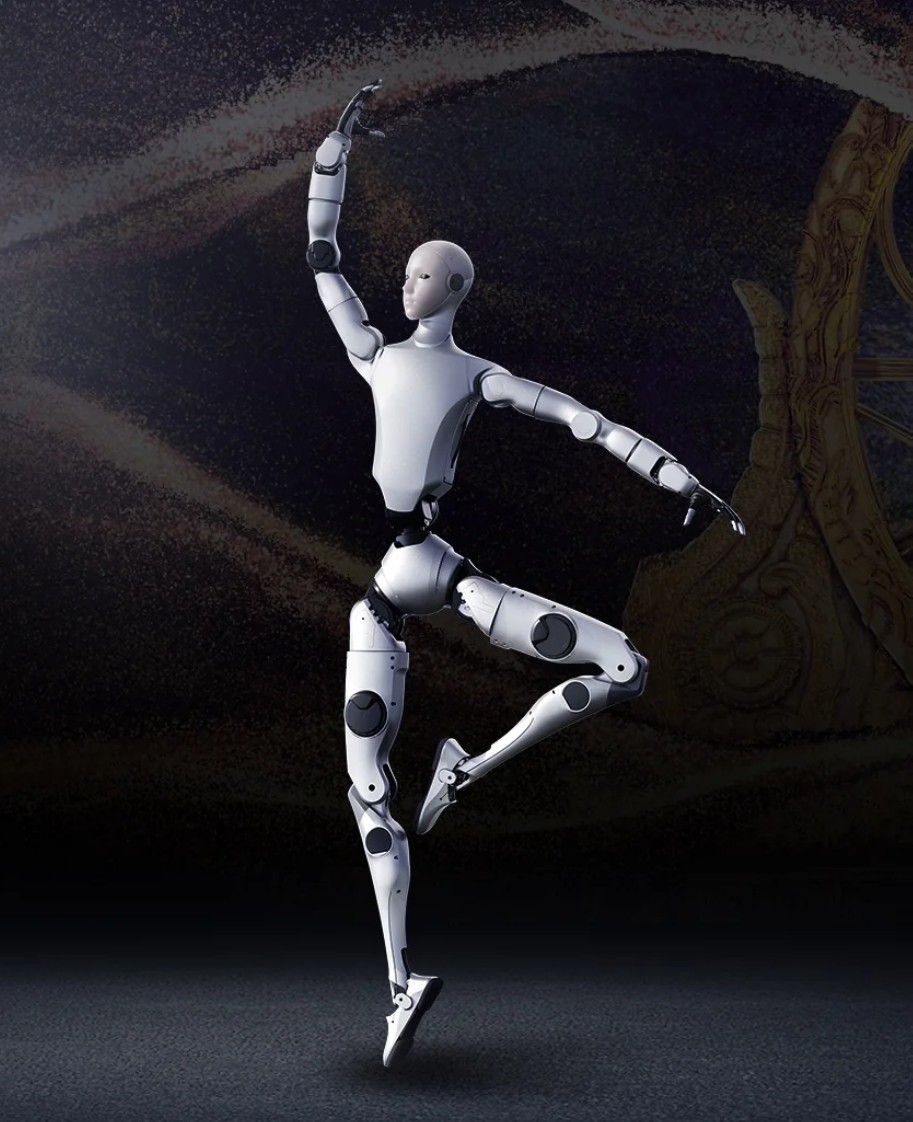
Unitree Robotics is one of the world's most recognized developers of humanoid and quadruped robots. From agile robotic dogs to full-size humanoid research platforms, Unitree has helped make advanced legged robotics more accessible to universities, developers, businesses, and organizations around the world.
HumanoidX helps Canadian organizations evaluate, acquire, program, deploy, and support Unitree robots—including humanoid, educational, research, and industrial platforms.
Founded
2016
Founder & CEO
Wang Xingxing
Headquarters
Hangzhou, Zhejiang, China
Primary focus
Humanoid and quadruped robotics
Last reviewed by HumanoidX: July 23, 2026
From quadruped robotics pioneer to humanoid manufacturer
Unitree Robotics, legally known as Hangzhou Yushu Technology Co., Ltd., is a civilian robotics company headquartered in Hangzhou, China. The company develops high-performance legged robots, humanoid robots, robotic arms, perception hardware, motion-control systems, and robot components.
Unitree first became known for producing agile quadruped robots at price points that made advanced robotics available to a much broader developer and research community. It subsequently expanded into industrial quadrupeds and general-purpose humanoid platforms, including the H1, G1, R1, and H2 families.
A defining characteristic of Unitree is its investment in vertically integrated robotics technology. The company develops many of its own motors, reducers, controllers, LiDAR systems, sensing technologies, and motion-control algorithms. This allows Unitree to iterate rapidly across hardware, software, control systems, and embodied-AI research.
“Unitree helped move high-performance legged robots from rare laboratory machines toward commercially available development platforms.”
HUMANOIDX PERSPECTIVE
Dynamic mobility
Unitree is particularly recognized for stable and agile movement across its humanoid and quadruped platforms.
Broader accessibility
Its product range and pricing strategy have opened advanced robotics to more universities, developers, research teams, and businesses.
Integrated hardware and software
Unitree develops core robotic components alongside the control systems and algorithms that make the robots move.
Growing developer ecosystem
Selected EDU platforms support secondary development, SDK access, ROS-based workflows, simulation, imitation learning, and reinforcement-learning research.
The evolution of Unitree Robotics
Unitree's story began with research into making high-performance quadruped robotics smaller, lighter, and more commercially accessible. In less than a decade, the company expanded from robotic dogs into full-size humanoids and embodied-AI development platforms.
Early XDog research
Founder Wang Xingxing began developing XDog while studying robotics. The project explored a lower-cost, high-performance quadruped architecture powered by electric motors.
Unitree Robotics is founded
Unitree was established in Hangzhou, China, with a focus on the research, development, and commercialization of legged robots.
Laikago reaches the global market
Unitree introduced Laikago as a high-performance quadruped research platform and began offering it internationally.
Consumer quadrupeds reach a wider audience
The Go1 introduced a smaller and more accessible quadruped platform. Unitree's A1 robots also gained widespread attention through synchronized public performances.
Beijing Winter Olympics
A group of 109 Unitree quadruped robots appeared during the opening ceremony of the Beijing Winter Olympics, demonstrating coordinated movement at a major global event.
New quadrupeds and the move into humanoids
Unitree expanded its quadruped lineup with the Go2 and B2. The company also presented the H1, its first general-purpose full-size humanoid robot.
The G1 humanoid platform
Unitree introduced the more compact G1 humanoid and later announced its mass-production version, bringing humanoid development to a broader research and developer market.
Humanoid robotics gains global visibility
Sixteen Unitree H1 humanoids performed a synchronized dance during China's Spring Festival Gala, demonstrating the rapid development of dynamic humanoid motion control.
The H2 generation
The H2 family expanded Unitree's full-size humanoid offering. The H2 EDU supports secondary development, while the H2 Plus targets advanced academic research, embodied AI, and integrated development workflows.
Product capabilities and configurations continue to evolve. HumanoidX periodically reviews manufacturer information and updates this reference page as new information becomes available.
What Unitree builds differently
Electric actuators and joint systems
Unitree develops core joint components, including motors, reducers, controllers, and power systems. These components are central to the speed, balance, responsiveness, and dynamic movement associated with its robots.
Motion control
The company's control systems coordinate multiple joints in real time, allowing its robots to walk, recover balance, navigate terrain, and reproduce increasingly complex movements.
Perception and LiDAR
Selected Unitree quadrupeds incorporate the company's wide-field 4D LiDAR technology, cameras, and other sensors for environmental perception, mapping, obstacle awareness, and navigation.
Embodied AI and robot learning
Unitree supports research in imitation learning, reinforcement learning, vision-language-action models, and robot world models. Its open-source work includes frameworks and datasets for manipulation and locomotion.
Developer platforms
EDU configurations are designed for organizations that require SDK access, secondary development, additional computing, custom perception, or integration with external AI systems.
What this means for a Canadian buyer
Choosing a robot is only the first step. The correct configuration depends on whether the platform will be used for research, education, events, human interaction, inspection, data collection, or operational tasks.
- ✓Standard, Pro, EDU, or industrial configuration
- ✓Computing and sensor requirements
- ✓SDK and secondary-development access
- ✓Dexterous-hand or gripper options
- ✓Battery and charging requirements
- ✓Canadian transportation and import planning
- ✓Site preparation and safety procedures
- ✓Programming and workflow integration
- ✓Training and ongoing technical support
Unitree robots available through HumanoidX
Explore Unitree humanoid robots, quadrupeds, and development platforms. Availability, configurations, pricing, and delivery schedules vary by model and project requirements.
Unitree catalog coming soon. Contact us to discuss available options.
Contact UsWhich Unitree robot may be right for you?
Unitree's platforms range from compact educational quadrupeds to full-size humanoid research systems. The right choice depends on the required mobility, development access, operating environment, computing, manipulation, and project budget.
H2 EDU
Full-size humanoid · Advanced secondary development
Full-size humanoid R&D, interaction and advanced demonstrations
G1 EDU
Compact humanoid · Research and development
Universities, AI laboratories, manipulation and robot-learning research
R1
Lightweight humanoid · Development and experimentation
Accessible humanoid experimentation and embodied-AI projects
H1
Full-size humanoid · Advanced research
Dynamic humanoid mobility and full-size research
Go2 EDU
Compact quadruped · Education and research
Education, mobility, perception and quadruped development
A2
Industrial quadruped · Commercial integration
Compact industrial mobility and inspection
B2
Heavy-duty quadruped · Industrial deployment
Demanding inspection and field applications
Manufacturer base prices do not represent the complete Canadian project cost. Configuration, freight, import costs, batteries, computing, hands, accessories, programming, deployment, training, warranty, and support can materially affect the final investment.
Not sure which configuration you need?
HumanoidX can compare platforms based on your use case, environment, technical requirements, deployment objectives, and budget.
Get a RecommendationBringing Unitree robots to Canadian organizations
Purchasing an advanced robot internationally involves more than selecting a model online. The correct configuration must be identified before the order, and the robot still needs to be transported, prepared, programmed, tested, and integrated into its intended environment.
HumanoidX works with Canadian businesses, universities, researchers, attractions, event producers, and public organizations to turn Unitree hardware into a practical deployment.
Needs assessment
We define the use case, operating environment, expected interactions, technical requirements, and measures of success.
Robot and configuration selection
We help identify the appropriate model, EDU package, computing, sensors, hands, accessories, batteries, and development requirements.
Canadian procurement
We coordinate quotations, ordering, freight, import preparation, and Canadian delivery planning.
Programming and integration
We connect the robot with conversational AI, business systems, sensors, content, knowledge bases, and custom workflows.
Deployment and training
We test the robot, prepare the environment, establish operating procedures, and train the client's team.
Monitoring and ongoing support
We provide support options for deployed robots, software updates, maintenance coordination, troubleshooting, and continued capability development.
Planning a Unitree deployment in Canada?
Tell us what you want the robot to accomplish. We'll help determine what is possible today, what requires custom development, and which Unitree platform fits the project.
What organizations should know about humanoid robots
Humanoid robotics is advancing quickly, but today's platforms should not be treated as autonomous replacements for any human job. Demonstration videos frequently show trained behaviours completed under specific conditions. A successful real-world deployment requires a clearly defined task, the correct environment, software development, safety planning, testing, and human oversight.
What works today
- •Robotics research and education
- •Controlled demonstrations and performances
- •Event engagement and guided interactions
- •Teleoperation and supervised workflows
- •Data collection and robot-learning projects
- •Selected inspection and mobility applications
What usually requires development
- •Natural conversations connected to business data
- •Recognition and personalization
- •Custom navigation
- •Dexterous object manipulation
- •Integration with enterprise systems
- •Reliable repetition of site-specific tasks
What must be evaluated carefully
- •Public and workplace safety
- •Privacy and camera usage
- •Network and data security
- •Operating environment
- •Battery management
- •Maintenance and spare parts
- •Insurance and staff supervision
HumanoidX begins with the use case—not the robot—so the recommended platform is based on a realistic deployment plan.
Building on Unitree platforms
Selected Unitree EDU robots support secondary development through Unitree SDKs, ROS-based communication, simulation environments, and open-source research projects. Depending on the model and configuration, developers can work with motion control, sensor data, cameras, LiDAR, external computing, manipulation systems, and embodied-AI models.
Unitree Developer Documentation
support.unitree.com
Unitree Open-Source Projects
github.com/unitreerobotics
Official Unitree Website
unitree.com
Unitree H2 Specifications
unitree.com/H2
Unitree G1 Specifications
unitree.com/g1
Unitree Go2 Specifications
unitree.com/go2
External technical documentation is maintained by Unitree Robotics. Features, interfaces, configurations, and specifications may change through hardware revisions and software updates.
Frequently asked questions about Unitree robots in Canada
Bring Unitree robotics into your organization
Whether you are exploring a humanoid research platform, an educational quadruped, an engaging robot experience, or an industrial mobility project, HumanoidX can help you move from interest to a realistic deployment plan.
Serving businesses, universities, researchers, attractions, and organizations across Canada.