Visitors do not need more lists.
They need a better place to begin.
Travellers rarely arrive with only one question. They may want to know what to do today, which activities are good for children, where to experience local food, what events are happening tonight, or how to reach a particular attraction. A visitor centre may hold all of those answers — but many visitors will not read every brochure, search every screen, or know which questions to ask.
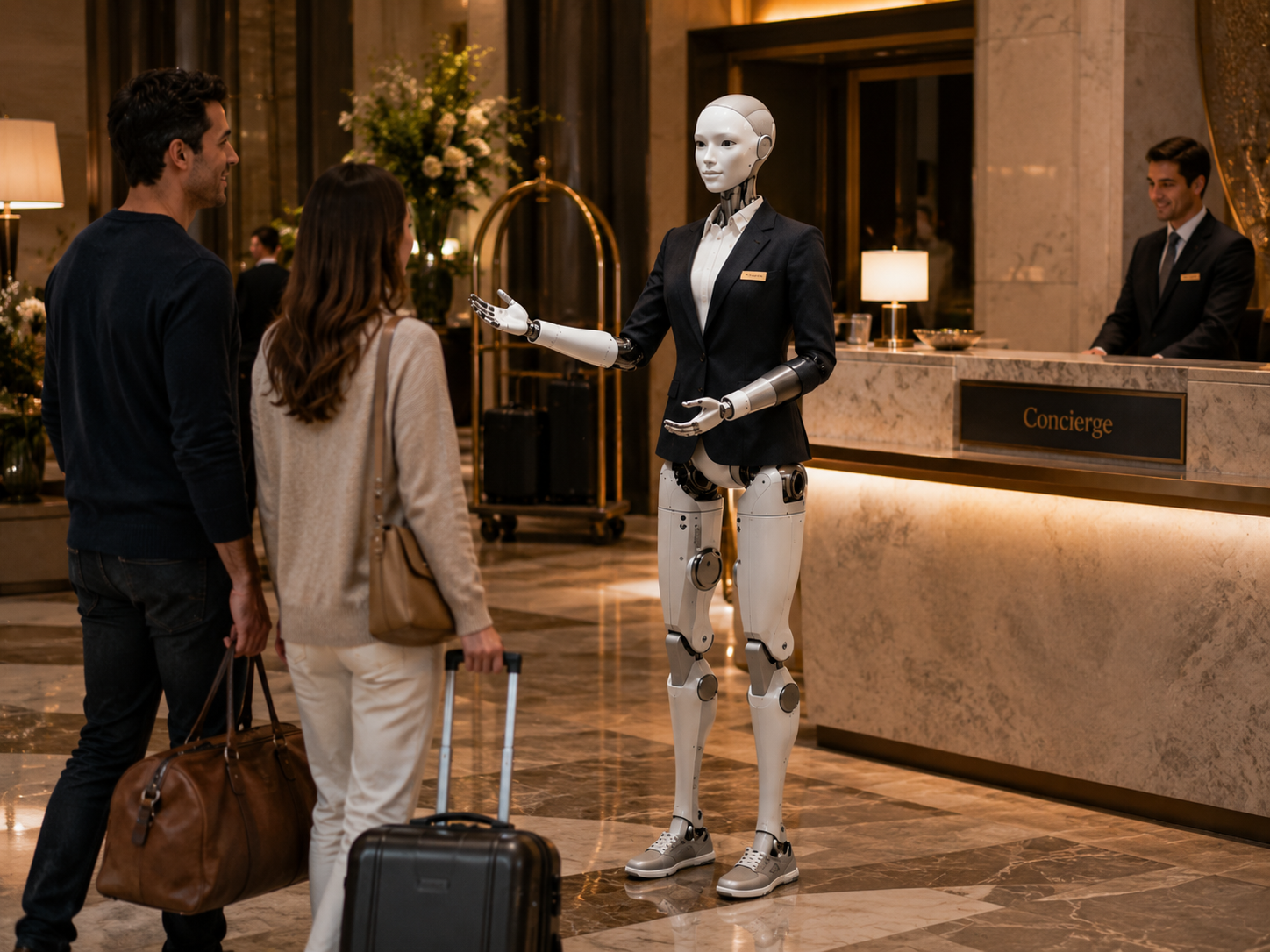
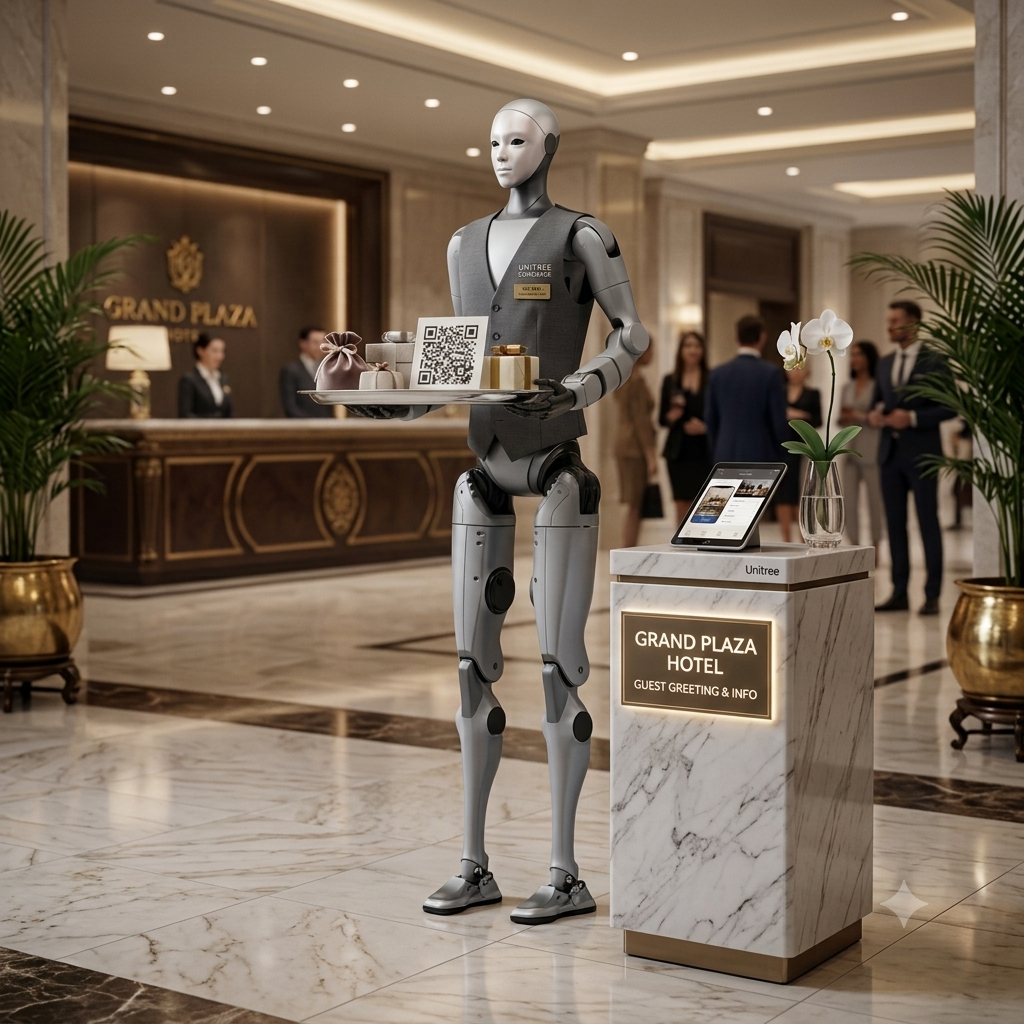
The Tourism Ambassador creates a visible and approachable place to begin. Visitors describe what they enjoy, how much time they have, and who they are travelling with. The robot helps them explore approved recommendations, understand the destination, find the right resources, and connect with a human professional when deeper assistance is needed. The objective is not simply to provide more information. It is to help each visitor make better use of their time.
Six capabilities designed around the visitor's journey.
Every deployment is customized around the destination, audience, season, approved tourism information, participating organizations, languages, location, and selected humanoid platform.
Greet every traveller with the right opening.
The Tourism Ambassador greets visitors arriving at a visitor centre, hotel, attraction, transportation hub, festival, or tourism activation. The greeting adapts to the destination, season, time of day, preferred language, and level of formality.
"Welcome to Montréal. Are you looking for something to do today, directions to a particular attraction, or ideas based on what you enjoy?"
Help visitors find experiences that fit them.
Travellers have different interests, schedules, budgets, mobility needs, and group dynamics. The robot asks a small number of relevant questions about time, interests, transportation, group size, and accessibility needs — then suggests approved categories or experiences.
"Since you have three hours, enjoy architecture, and are travelling on foot, a short route through the historic district may be the best fit."
Suggest approved attractions and experiences.
Recommendations reflect the visitor's stated interests, available time, location, mobility needs, season, operating schedule, and participating tourism information. The robot explains why it made each suggestion — and does not present a closed or unavailable attraction without stating the limitation.
"I suggested the botanical garden because you are travelling with children, prefer an outdoor activity, and have approximately half a day."
Help visitors organize a realistic sequence of experiences.
The Tourism Ambassador may help visitors build simple itineraries with suggested order, estimated visit duration, approximate travel method, distance between stops, indoor and outdoor balance, meal opportunities, and reservation reminders — without creating schedules that leave no time for rest or spontaneous exploration.
"You could begin at the public market, walk through the historic district, visit the riverfront, and finish at the museum before it closes."
Help visitors get where they need to go.
The robot explains transit, walking routes, shuttle services, bicycle options, taxi pickup areas, rideshare procedures, and accessible transportation. It distinguishes between general guidance and live operational status — and encourages visitors to confirm current service information before departure.
"The metro is usually the fastest way to reach the downtown district. For current service interruptions, please check the official transit status before leaving."
Introduce human tourism professionals when more is needed.
The robot helps visitors begin. Human professionals — tourism agents, hotel concierges, local guides, destination specialists, and community interpreters — provide the complex itineraries, local insight, special needs, and exceptions that require judgment, experience, and genuine local knowledge.
"A human tourism specialist at the information desk can help with group bookings, accessibility requirements, and arrangements that require confirmation."
From "What should we do?" to a practical afternoon plan.
A couple approaches the robot on their first visit with one free afternoon. The robot helps them make a realistic choice — rather than overwhelming them with possibilities.
Illustrative route — generic destination example
Situation
A couple visits the city for the first time and has one free afternoon.
Tourism Ambassador
"Welcome. Are you looking for food, history, art, nature, shopping, or a mix of experiences?"
Visitors
"We like food and history, and we have about four hours."
Tourism Ambassador
"Will you be travelling on foot or using public transportation?"
Visitors
"Mostly walking."
Tourism Ambassador
"A historic-district route would be a strong fit. You could begin at the public market, walk through the heritage streets, visit the riverfront, and finish with an early dinner nearby."
Visitor asks
"Could we also fit in a museum?"
Tourism Ambassador
"You could include the local history museum, but it would make the schedule tighter. I would recommend either the museum and market, or the full outdoor route — not all three."
Tourism Ambassador — confirmed
"The museum is approximately 12 minutes away on foot. I can display the route and provide the official admission page so you can confirm today's hours."
The robot has helped the visitors make a realistic choice rather than overwhelming them with possibilities.
The robot recommends based on what each visitor actually wants.
Recommendations should feel personal — not random. Select a visitor interest to see how the Tourism Ambassador approaches each category.
Food
Recommends public markets, restaurant districts, culinary events, and local food experiences based on available time and dietary preferences.
Whether visitors have one hour or a full weekend — the robot makes the most of the time they have.
A simple itinerary should leave adequate time for transportation, waiting, rest, and spontaneous exploration. The robot does not create unrealistic schedules merely to include more attractions.
1 hour
One clear destination, close to the visitor's starting point. No cross-city travel.
Half-day
A realistic neighbourhood-scale route with one meal opportunity and indoor-outdoor balance.
Full day
A structured day with realistic travel time, rest breaks, and a clear end point.
Weekend
Distinct themes per day, with flexibility for spontaneous exploration and rest.
Every recommendation should be understandable — not just convenient.
The Tourism Ambassador does not simply list the ten most popular attractions every time. A visitor should always be able to ask "Why did you recommend that?" — and receive a clear answer.
Recommendation formula
"Why this experience?"
The robot explains how the visitor's stated interests, schedule, and location informed the suggestion.
"What trade-offs exist?"
The robot acknowledges when a suggestion requires compromise — such as visiting fewer attractions but spending more time at each.
"What should be confirmed?"
Hours, ticket availability, weather-dependent elements, and partner status are flagged for the visitor to verify.
"When does a human expert help?"
Complex itineraries, special needs, group planning, local insight, and exceptions that require judgment are directed to tourism professionals.
Four information layers — each handled with the right level of precision.
Tourism information changes constantly. The robot uses careful language — making uncertainty visible rather than hiding it — and clearly distinguishes between destination guidance and commercial relationships.
Prepared once and reviewed periodically. The robot answers directly.
Requires an approved current source or a clear confirmation message to the visitor.
Commercial relationships are disclosed appropriately — not presented as neutral recommendations.
Not available without authentication, consent, and a clear approved business purpose.
Transparent promotion protects visitor trust.
A tourism organization may want the robot to introduce participating local partners. The robot clearly distinguishes between destination information, curated recommendations, and paid partnerships — rather than presenting a sponsored business as an entirely neutral recommendation.
General visitor guidance drawn from official tourism resources. Applies to all visitors regardless of any commercial relationship.
"The historic district is a ten-minute walk from here and includes several buildings from the 18th century."
Approved tourism businesses and experiences included in the destination's official visitor program. Identified as participating partners.
"This is one of the local restaurants currently featured by the tourism office for regional cuisine."
Paid or campaign-related promotion. Clearly labelled so visitors understand the commercial relationship before making decisions.
"This is a featured promotion from a destination partner. General dining recommendations are also available."
A destination is more than a product.
It is a place shaped by people, language, history, and living culture.
The Tourism Ambassador may become one of the first voices visitors encounter in the destination. That creates a responsibility to represent the place accurately and respectfully. The destination and relevant communities retain authority over their stories.
Twelve deployment contexts. One archetype — adapted for each.
Visitor information centres
Destination orientation, recommendations, maps, event information, and human referrals.
Airports
Support arriving travellers with transportation, destination highlights, hotel areas, visitor resources, and short layover ideas. The robot does not provide immigration, customs, airline, or security decisions.
Train and bus stations
Help travellers understand local transportation, nearby attractions, accommodation zones, and visitor services.
Cruise terminals
Welcome passengers, explain shore experiences, provide city orientation, and support group departures.
Hotels and resorts
Help guests discover nearby attractions, restaurants, transportation, events, and bookable experiences.
Municipal attractions
Represent a city or region at public buildings, waterfronts, public squares, and seasonal information points.
Festivals
Explain schedules, stages, food areas, transportation, accessibility, and destination experiences.
Museums and cultural institutions
Connect visitors with nearby attractions and broader destination stories.
Convention centres
Help conference attendees use their free time and discover the surrounding city.
Tourism trade shows
Represent destinations in a memorable and interactive way for travellers, media, tour operators, and industry partners.
Shopping districts
Help visitors explore stores, restaurants, services, events, and neighbourhood highlights.
Parks and nature centres
Explain trails, activities, visitor rules, seasonal experiences, and conservation information from a controlled indoor point.
The robot helps visitors begin. Tourism professionals add local depth.
The humanoid helps visitors begin
Tourism professionals add local depth
Eight roles across the visitor journey.
The same archetype can be reconfigured for different tourism environments, seasons, and institutional contexts throughout the year.
Visitor Centre Ambassador
Provides broad destination information and helps visitors decide what to explore.
Hotel Destination Concierge
Helps hotel guests discover nearby experiences and make better use of their stay.
Airport Welcome Ambassador
Introduces the destination and helps arriving travellers understand transportation and visitor options.
Festival Guide
Explains festival schedules, locations, transportation, accessibility, and nearby experiences.
Neighbourhood Guide
Focuses on one district, borough, cultural area, or commercial destination.
Attraction Ambassador
Represents one major tourism attraction while connecting it to the broader destination.
Conference City Guide
Helps conference attendees discover the destination around their professional schedule.
Tourism Campaign Ambassador
Used temporarily for destination marketing, media, travel shows, and promotional activations.
Begin with curated knowledge. Expand deliberately.
A focused first pilot does not need access to personal travel accounts or complex booking systems. The integration roadmap enables growth at the organization's pace.
Curated destination information
The robot explains attractions, neighbourhoods, transportation, culture, and general recommendations.
Current events and operating information
The robot receives selected updates about schedules, events, closures, and seasonal programming.
Digital itinerary and booking links
Visitors can receive maps, attraction links, booking pages, and saved recommendations through a transparent interface.
Consent-based trip personalization
The robot may help a visitor build and save a broader itinerary where privacy, consent, data retention, and system security have been addressed.
Most tourism guidance can be provided without identifying the visitor.
The Tourism Ambassador begins with minimal data collection. The robot can ask "Are you travelling with children?" without knowing the children's names or storing their identities.
Anonymous interaction analytics may be collected — but always separated from identifiable contact information and governed by an approved privacy framework.
Core privacy principles
A destination should be discoverable by visitors with different mobility, sensory, cognitive, and communication needs.
The shortest route is not always the accessible route. Accessibility information should come from validated destination or venue sources.
Accessible tourism should be equally prominent — not hidden beneath the main itinerary.
Tourism locations present unique safety considerations.
High visitor volume, luggage, children, strollers, mobility devices, and temporary installations require careful deployment planning. For many tourism pilots, a stationary or limited-mobility robot in a prominent information area creates the strongest balance of impact, usefulness, and safety.
Understand what visitors actually want — not just what you have told them about.
Repeated requests for rainy-day activities may reveal a need for a stronger indoor-experience campaign — not just a more capable robot.
Visitor engagement
Destination interests
Trip planning
Information gaps
Partner engagement
Subject to the approved privacy framework. No tourism-spending figures or conversion rates are generated or implied.
Eleven steps from destination discovery to pilot expansion.
HumanoidX works with the tourism organization's curators, educators, local partners, and operational teams to ensure the humanoid experience supports the destination's identity and visitor objectives.
Understand the destination
Review the audience, season, visitor experience, tourism priorities, existing resources, partners, languages, and deployment location.
Choose a focused visitor role
Start with one clear context: visitor-centre welcome, a hotel destination guide, an airport activation, a major festival, or conference delegate support.
Define recommendation boundaries
Determine which experiences the robot can recommend, how commercial partners are represented, and when human assistance is required.
Prepare approved destination knowledge
The tourism organization supplies or validates attractions, events, history, transportation, accessibility, maps, and partner content.
Design visitor journeys
Create interaction paths based on interests, available time, transportation, language, and group type.
Assess live-information needs
Determine which details require current event, transit, schedule, closure, or weather-related information.
Assess the physical environment
Review traffic, flooring, lighting, power, connectivity, luggage, accessibility, operating zones, weather exposure, and safety.
Configure and test
Develop the personality, languages, recommendations, itineraries, directions, disclaimers, and human escalation rules.
Test realistic visitor scenarios
Include one-hour visits, families with children, rainy-day requests, accessibility needs, international visitors, closed attractions, fully booked events, and unknown questions.
Launch a managed pilot
The robot operates for a defined period with human support, performance monitoring, and visitor feedback.
Review and expand
Evaluate engagement, recommendation quality, visitor needs, partner activity, technical reliability, and opportunities for wider deployment.
Seven focused, measurable starting points.
Each pilot targets one clearly defined tourism context so performance can be evaluated honestly and used to plan the next phase.