
Humanoids built for a role, not just a demonstration.
Humanoid robots arrive with remarkable technology. But hardware alone does not make a robot useful.
HumanoidX develops role-ready humanoid robot archetypes designed around real environments, clear responsibilities, defined behaviours, safety boundaries, business objectives, and measurable outcomes.
From welcoming guests at an event to supporting visitors in a hotel, campus, museum, retail environment, or commercial facility, every archetype is designed to answer one important question:
What useful role should this humanoid perform?
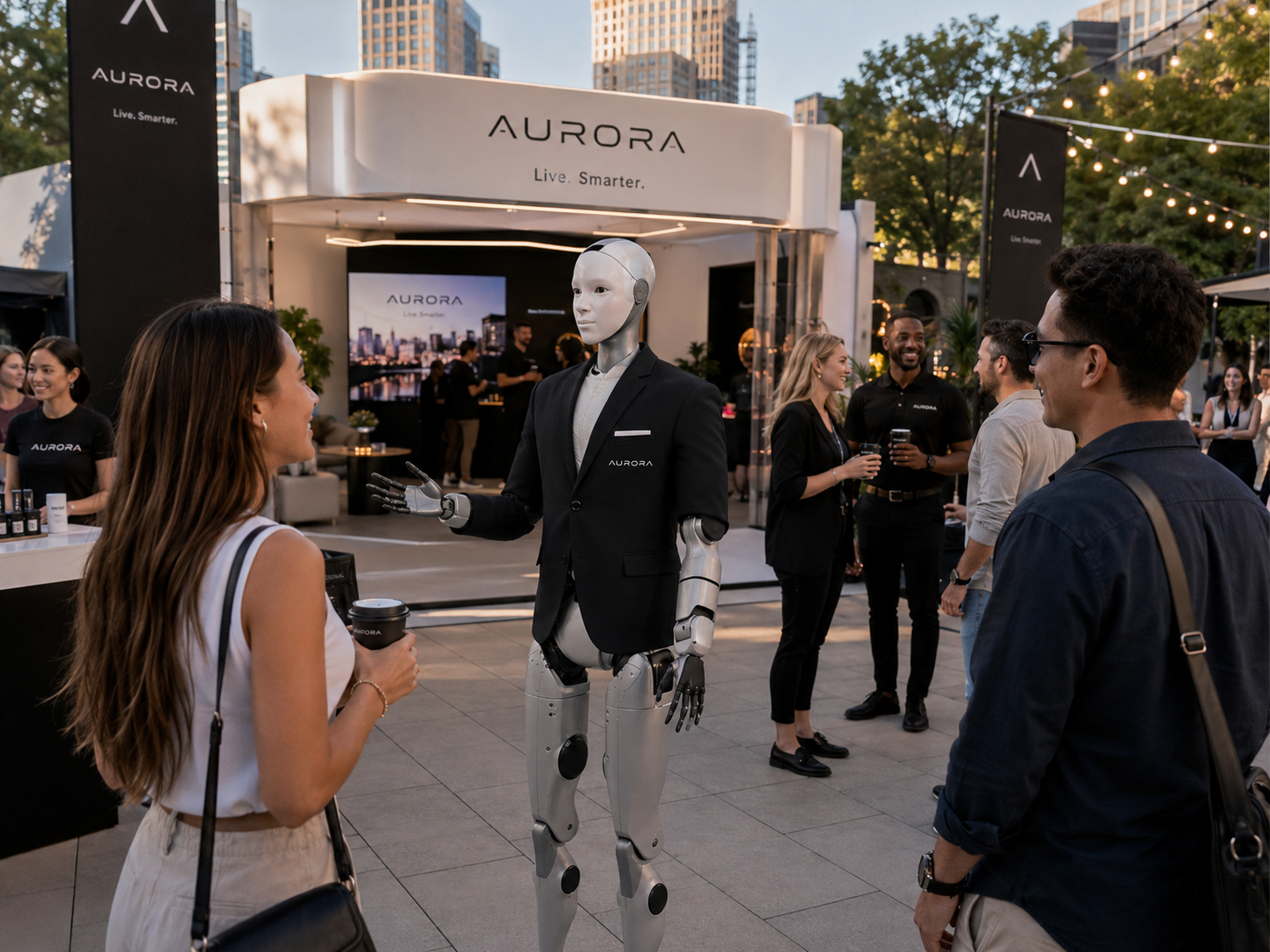
From Robot Hardware to a Real-World Role
A humanoid robot may be able to walk, speak, recognize objects, answer questions, and interact with its surroundings.
But a business does not need a list of technical capabilities.
It needs a robot that knows:
That is the purpose of the HumanoidX Archetype Program.
Each archetype combines a defined role, personality, knowledge system, conversation model, physical behaviours, operating rules, safety protocols, integrations, supervision model, and performance framework. This transforms a general-purpose robot into a more focused and deployable system.
What Is a Humanoid Robot Archetype?
A HumanoidX archetype is a reusable foundation for a specific humanoid robot role.
It is not simply a character, a script, or a costume. It is a complete deployment model designed around the needs of a particular environment.
An archetype may include:
A defined purpose
What is the robot there to accomplish? Welcome visitors? Answer questions? Explain products? Provide directions? Support an operational workflow?
A consistent personality
The robot's tone, level of formality, conversational style, body language, and interaction habits are designed around the environment it represents.
A controlled skill set
Each archetype has clearly defined capabilities, approved tasks, operating limits, fallback behaviours, and escalation procedures.
Environment-specific knowledge
The robot can be connected to approved information about an event, company, property, venue, campus, product catalogue, schedule, service, or facility.
Physical behaviours
Depending on the robot and deployment, an archetype may include gestures, demonstrations, supervised object handoffs, movement within defined zones, inspections, or other physical interactions.
Safety boundaries
Every archetype defines what the robot can do, what it cannot do, when human supervision is required, and how the robot should respond when uncertain.
Business integrations
The robot may connect with registration systems, directories, customer relationship management platforms, scheduling tools, approved databases, digital forms, notification systems, and internal software.
Performance measurement
Deployments can be evaluated through interaction volume, task completion, question categories, response quality, human interventions, uptime, visitor feedback, lead generation, or other relevant metrics.
Explore Our Humanoid Robot Archetypes
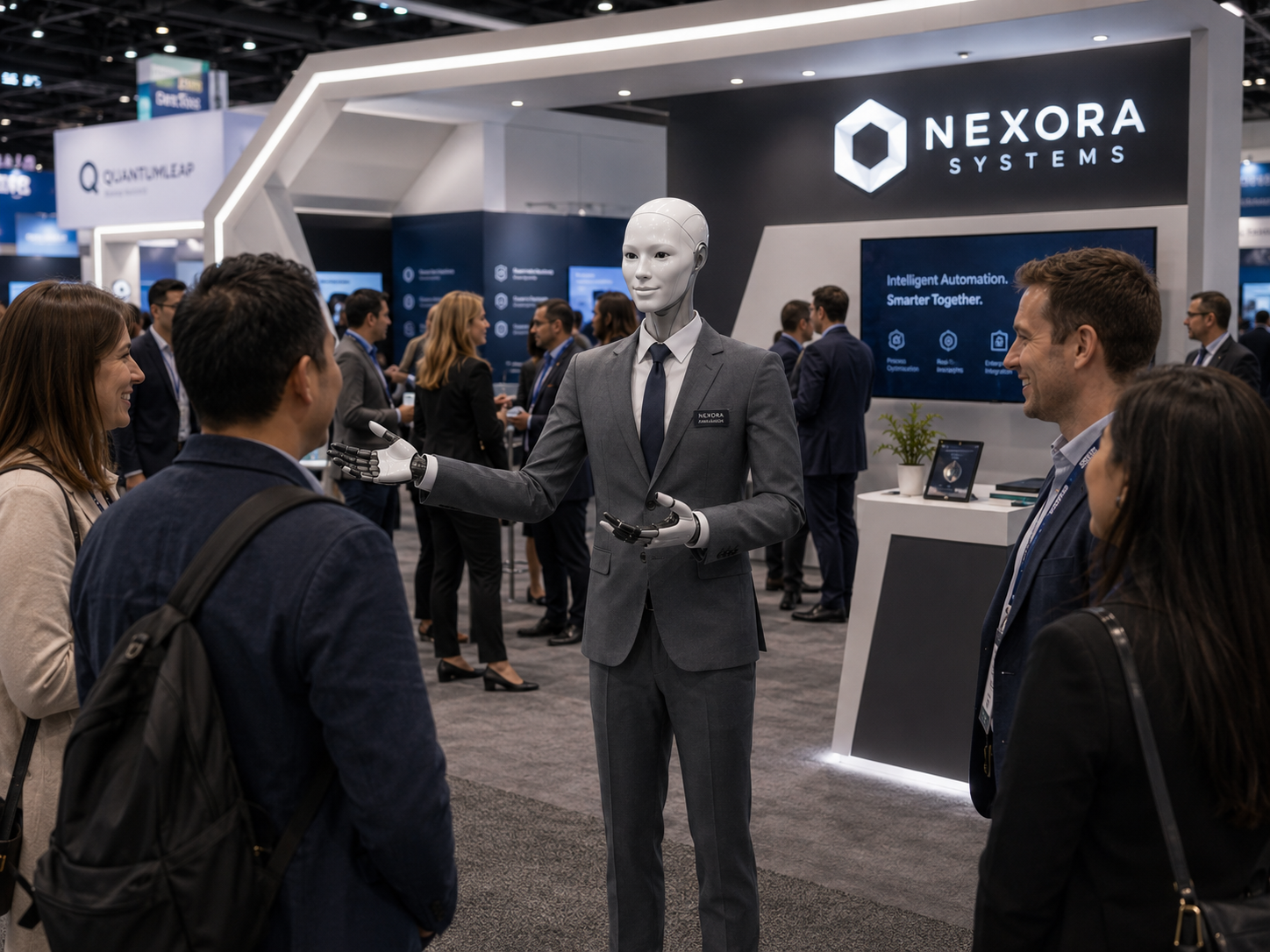
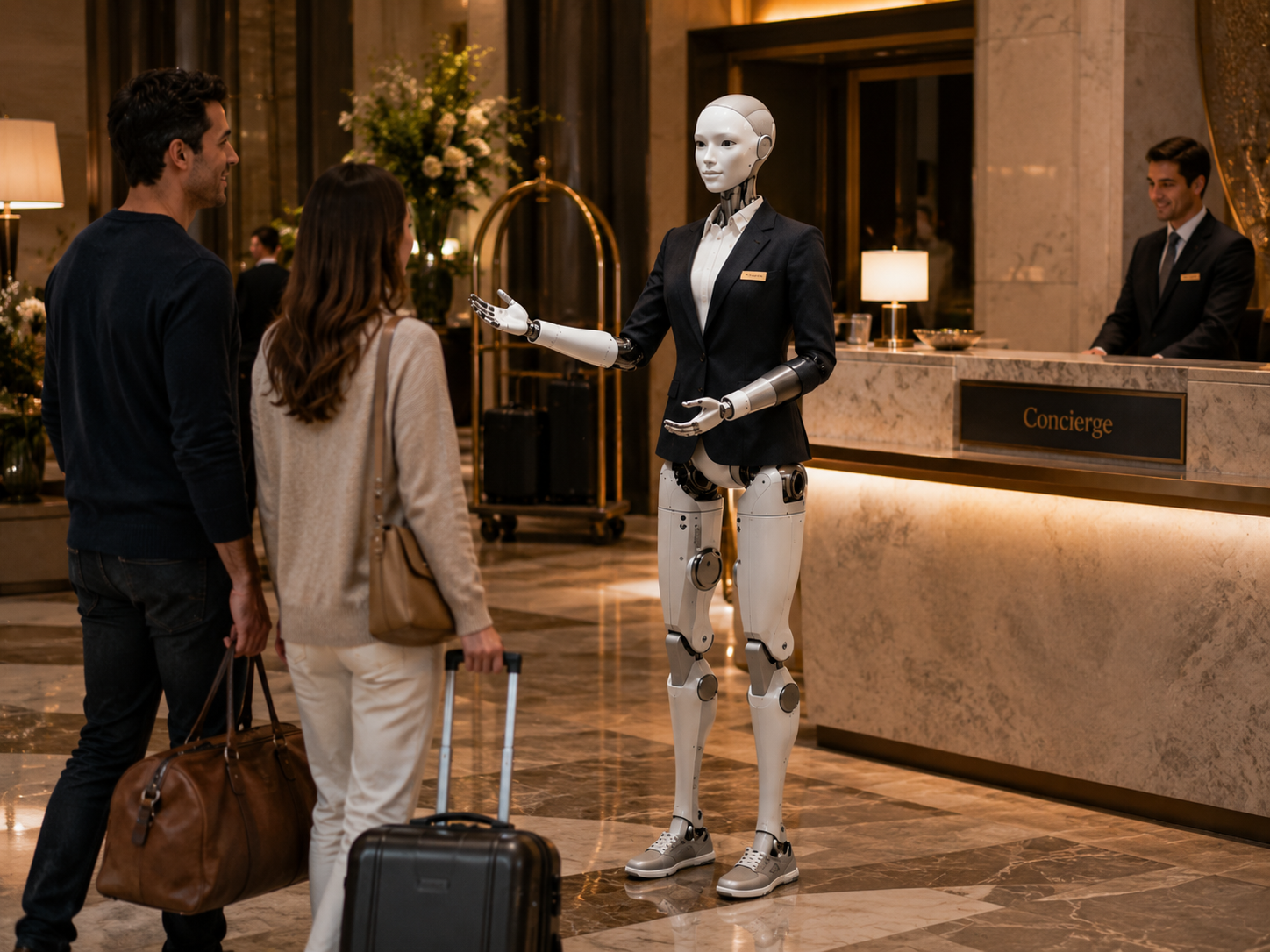
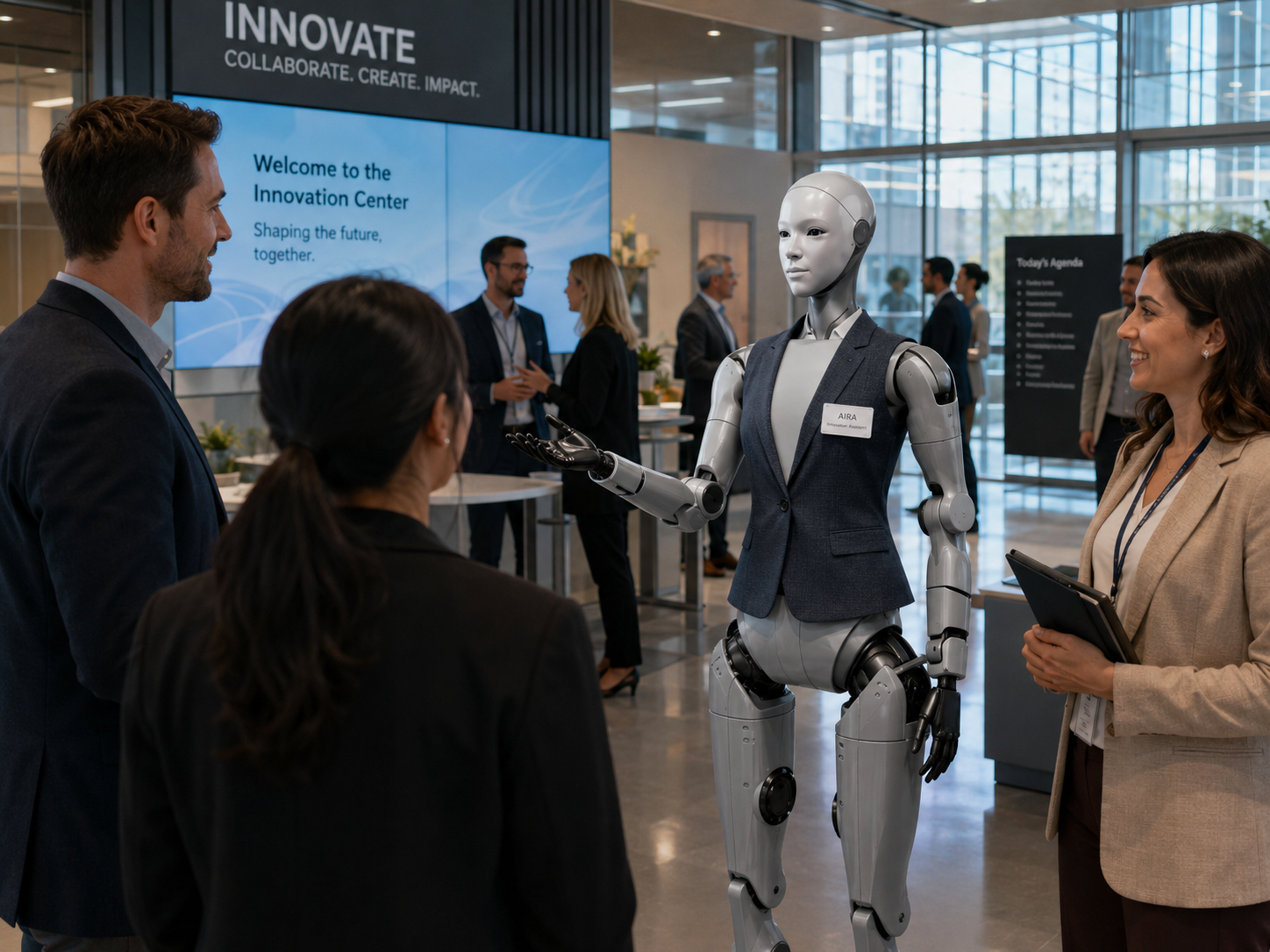
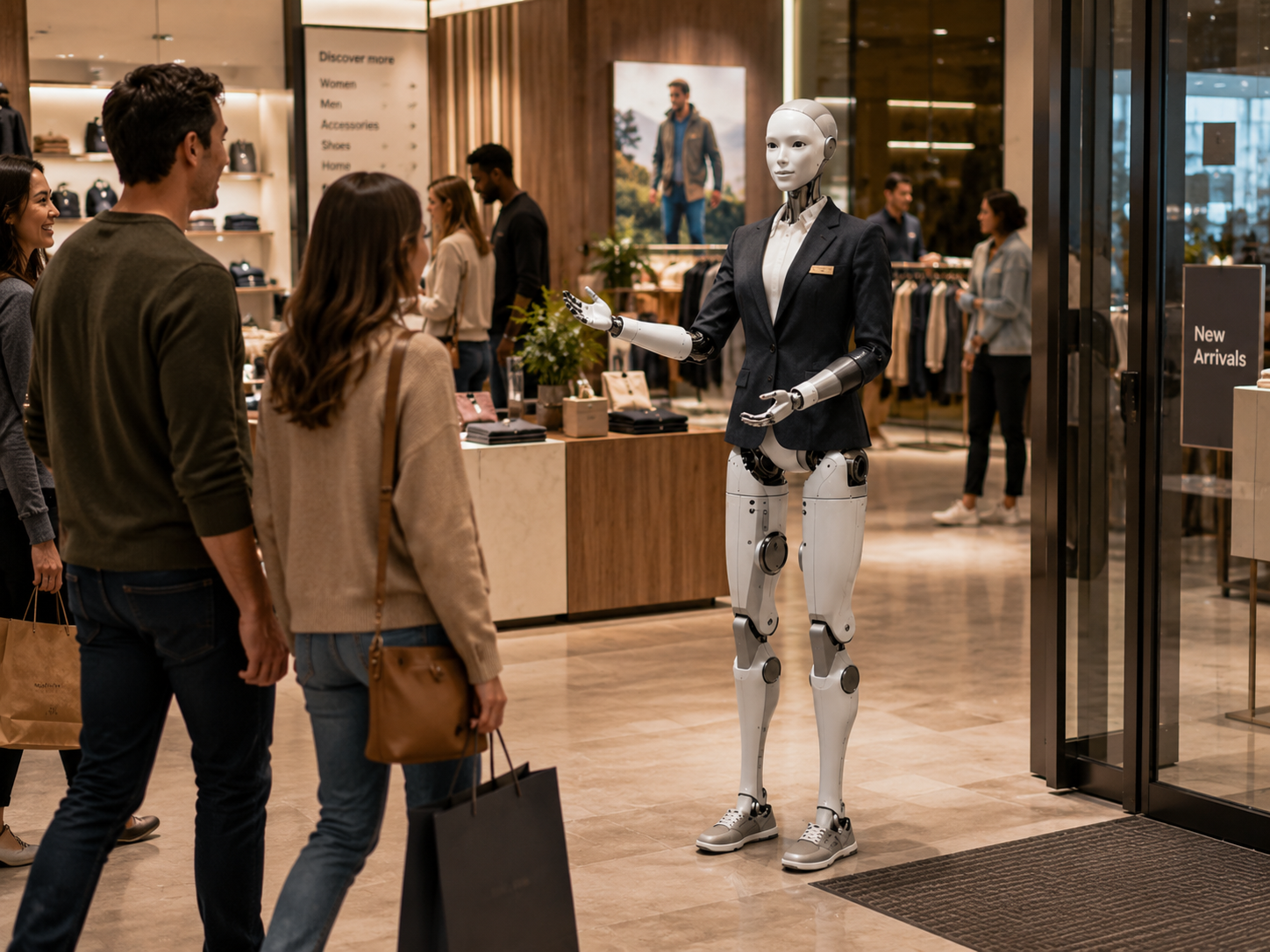
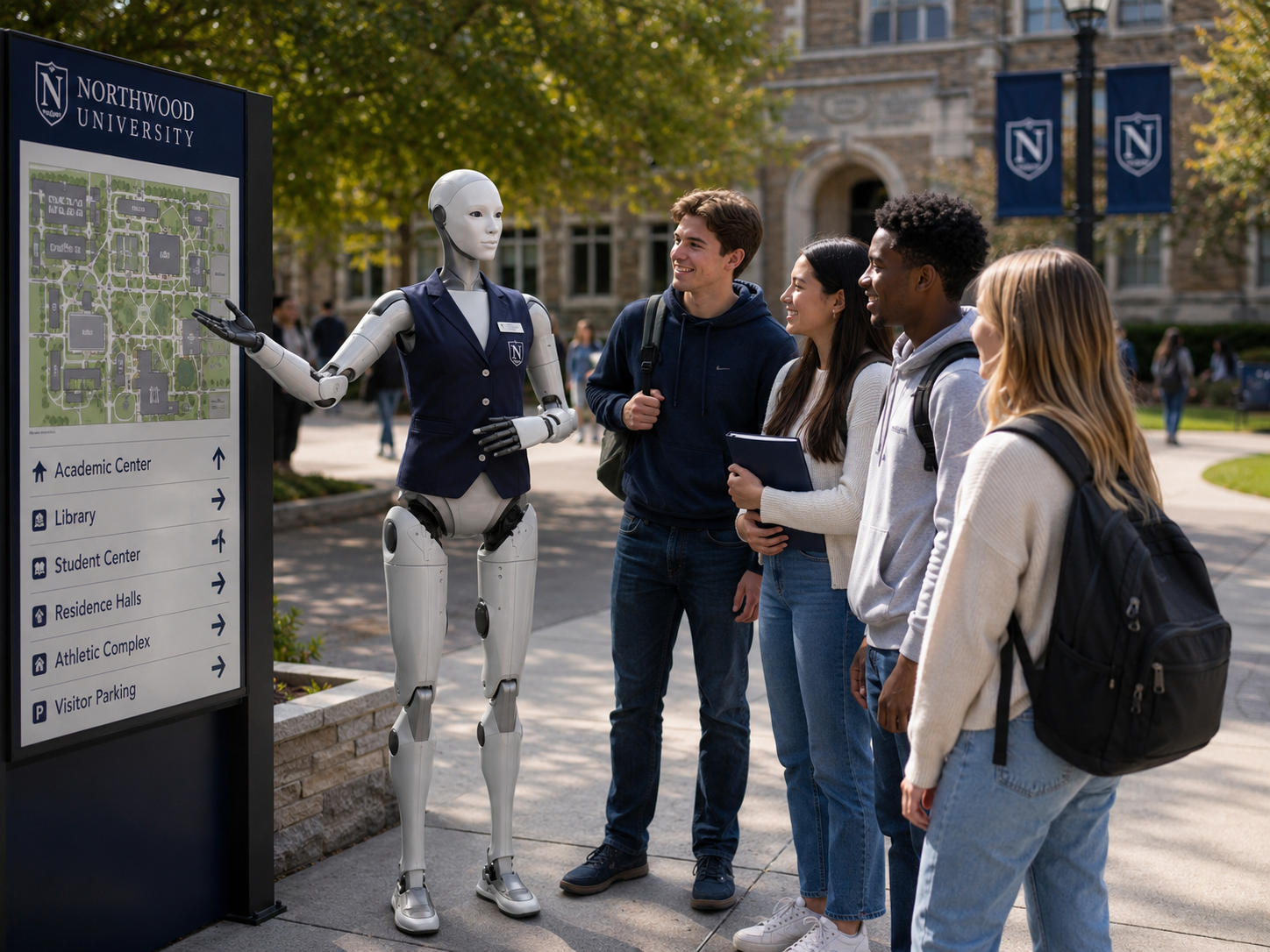
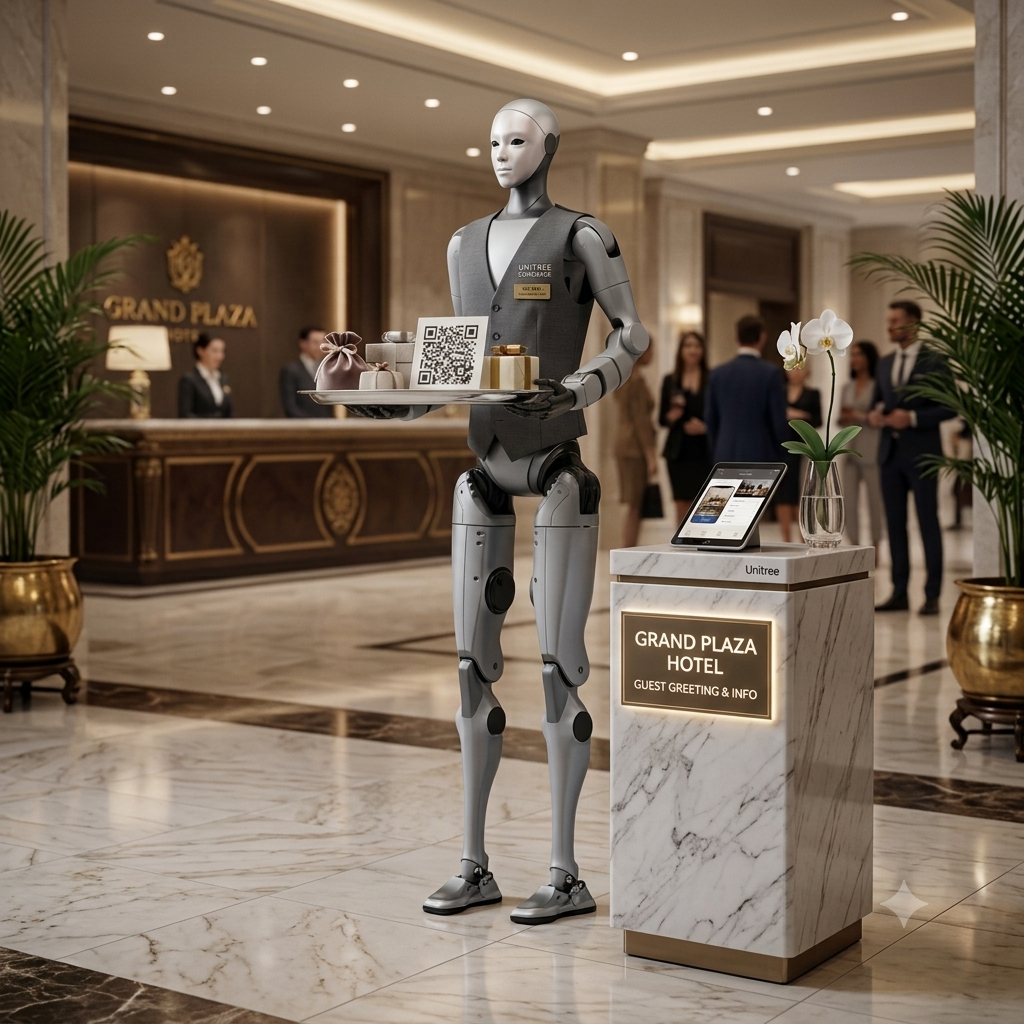
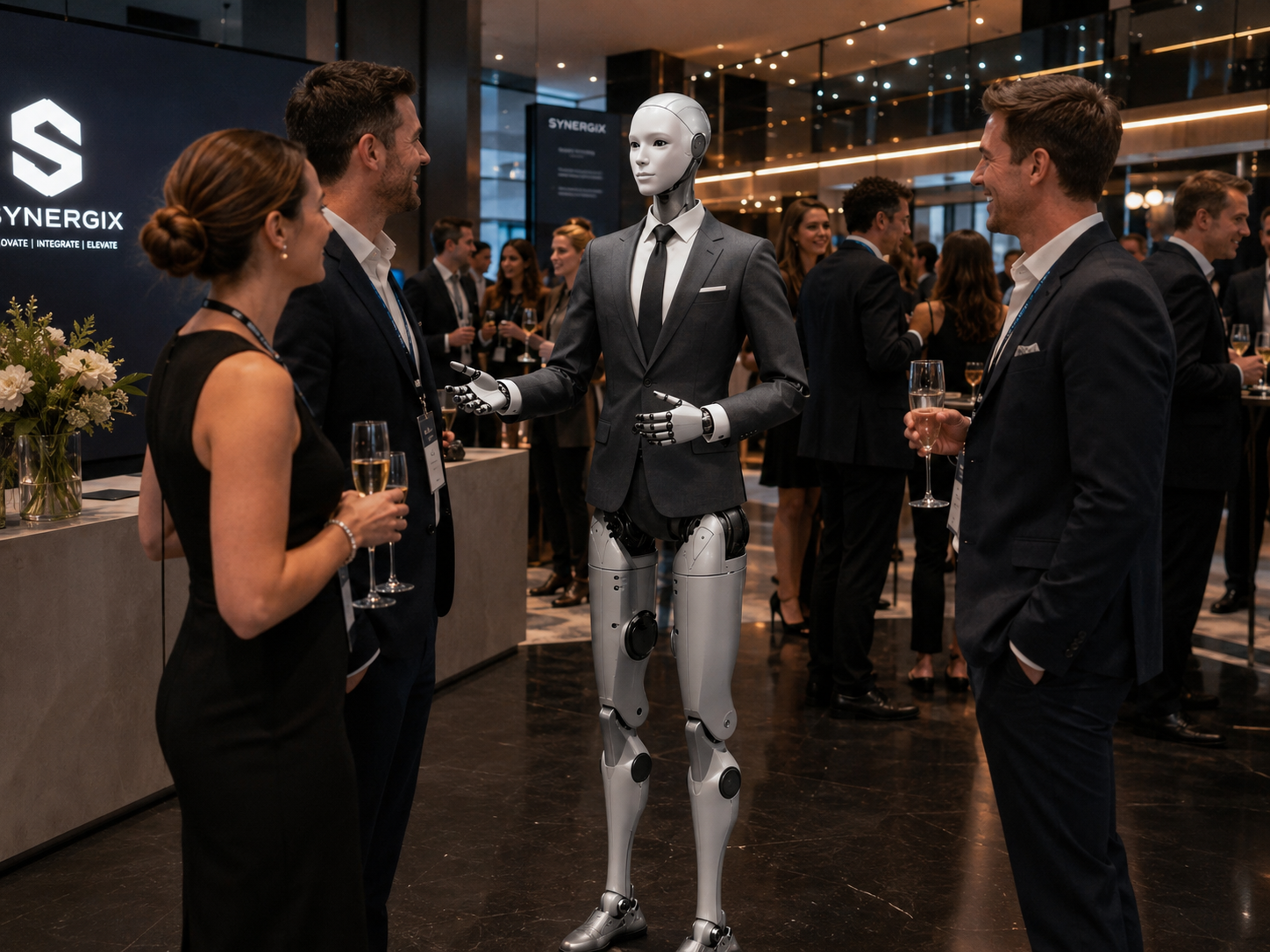
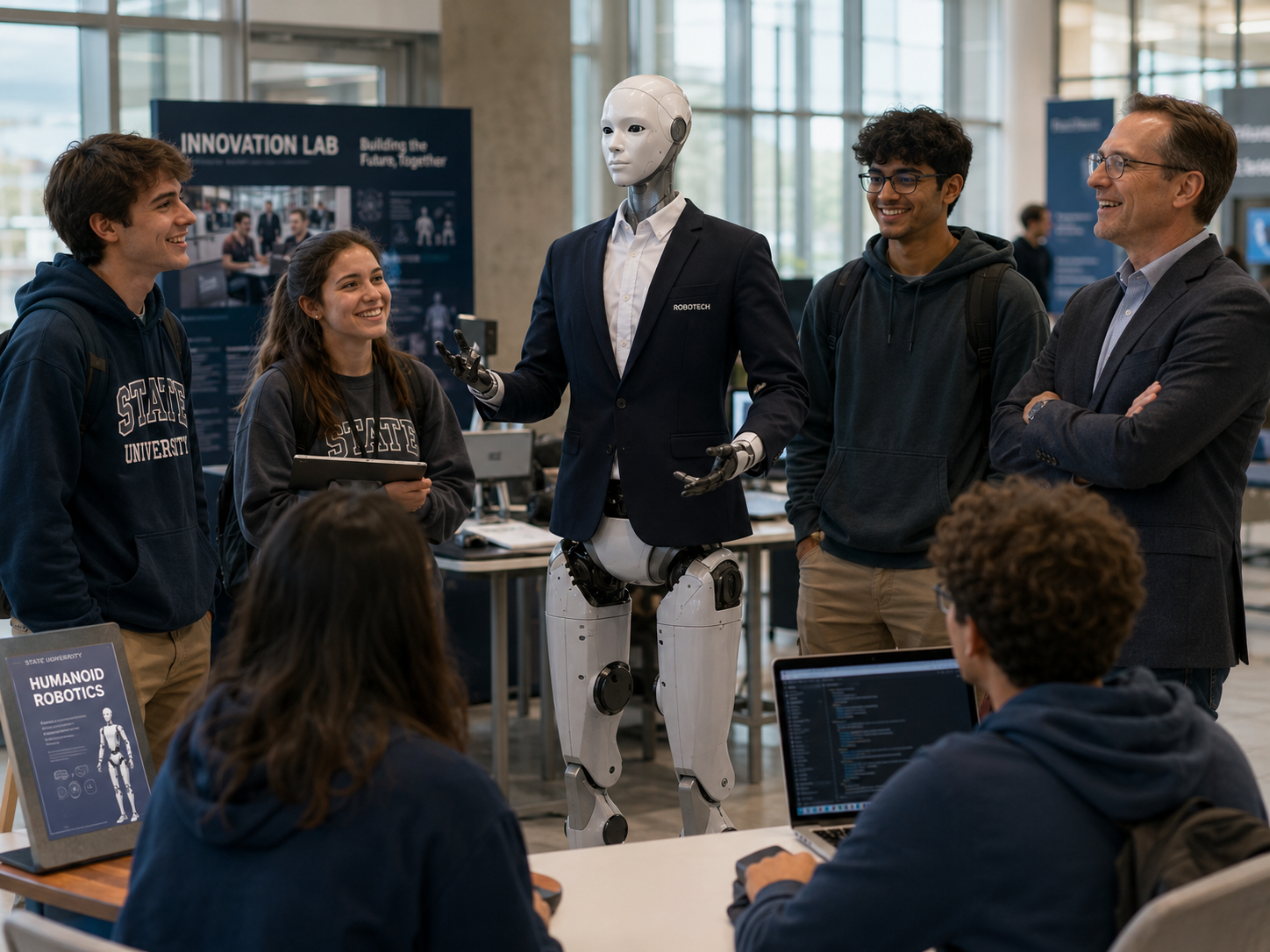

Custom archetype program
Your best use case may not exist yet.
Humanoid robotics is still an emerging category. The most valuable applications will not all come from a predefined list. They may emerge from a task your organization already understands.
The stronger question is not "how can we use a humanoid robot?" It is: which role could a humanoid perform usefully, safely, and repeatedly inside your real operation?
Our approach
We do not start with a robot model.
Choosing a robot too early can force the project around the hardware rather than the business need. Different humanoid platforms vary in height, mobility, payload, dexterity, battery life, sensors, software access, and cost.
A credible assessment should be willing to conclude that a humanoid is not the right tool for a given situation.
Hardware follows the use case.
HumanoidX begins by defining
Then the role
What should the robot do in this environment?
Then the environment
Where will it operate, and what constraints does that create?
Then required capabilities
What behaviours, knowledge, and physical actions are needed?
Then safety constraints
What is the operating zone, supervision model, and fallback behaviour?
Then operating model
Who assigns tasks, monitors the robot, and handles exceptions?
Then expected value
How will the deployment be evaluated?
Custom archetype design process
How we design a custom archetype.
We begin with the current operation and work through ten structured stages before a single line of code is written.
Define the problem
We begin with what happens today: who does the work, how often, what makes it difficult, which parts require judgment, which are repetitive, and what improvement would mean.
Define the people involved
A humanoid role exists inside a human system. We identify customers, employees, supervisors, exception handlers, technical teams, privacy teams, and everyone else the robot may interact with.
Define the environment
Flooring, stairs, elevators, doors, lighting, noise, crowds, vehicles, connectivity, power, charging, and emergency routes. A behaviour that works in a lab may fail in a noisy lobby or narrow warehouse.
Define the role
The archetype receives a concise purpose statement: who the robot serves, where it operates, what it accomplishes, and what it does not replace.
Define the task set
Each task must have a starting condition, an approved action, a completion condition, a fallback response, and a human escalation path.
Define the knowledge
We classify what the robot needs to know as stable, frequently changing, restricted, or personal — and establish how each category is sourced, updated, and governed.
Define the personality
A hospital robot, industrial assistant, children's educator, luxury concierge, and trade show ambassador should not behave the same way. Tone, formality, vocabulary, and pace must fit the role.
Define physical behaviours
Every movement — waving, pointing, carrying, following a route — must be assessed for stability, clearance, payload, human proximity, failure, emergency stop, recovery, and supervision.
Define human control
Who starts and monitors the robot? Who can pause it? Who receives alerts, resolves exceptions, updates information, and decides whether operation continues?
Define success
Interactions completed, questions answered, route completion, task completion, worker feedback, system uptime, safe-stop events, human interventions, and operational value — metrics depend on the role.
Blueprint document
Every custom archetype is documented through a structured blueprint.
The blueprint becomes the foundation for development, testing, staff training, deployment, and continuous improvement.
What makes humanoids unique
Combining conversation and physical capability.
Humanoid robots become especially interesting when a role requires both communication and action.
The opportunity is not merely to give a chatbot a body. It is to design a role where physical presence and intelligence genuinely support each other.
"The best humanoid experience may be one that gets the person to the right human conversation more quickly."
Conversation
Physical
Software
Possible directions
A custom role may combine elements from several existing archetypes.
These are starting points. The strongest custom archetype will be grounded in a real need, not selected merely because it appears futuristic.
Customer Experience
Employee Support
Operations
Education and Research
Public and Community Services
Entertainment and Media
Development model
A phased development model.
Expansion is earned — not assumed. Only after proof at each phase do we move forward.
Concept and feasibility
We determine whether the role is valuable and whether a humanoid is appropriate.
Archetype blueprint
We define the complete role — purpose, tasks, knowledge, personality, physical behaviours, supervision, safety, privacy, integrations, and success measures.
Prototype
A controlled demonstration of the core interaction or workflow — testing conversation, movement, knowledge, object handling, route, notification, user reaction, and human handoff.
Controlled pilot
The robot operates in a limited real environment with defined users, restricted hours, human supervision, approved behaviours, performance monitoring, and incident procedures.
Optimization
We review failures, questions, human interventions, user feedback, safety observations, technical reliability, and operational value. The archetype is then refined.
Expansion
Only after proof: additional tasks, longer hours, more locations, additional integrations, greater autonomy, multiple robots, and new robot platforms.
Custom archetype deliverables
HumanoidX provides the complete deployment layer.
Depending on the project, HumanoidX may provide everything from initial discovery through to on-site pilot operation and expansion planning.
The objective is to turn a promising idea into a structured and testable humanoid role.
A successful archetype produces more than a programmed demonstration. It creates a reusable body of operational knowledge that should not disappear when a robot model changes.
Feasibility criteria
A custom project should have a credible answer to these questions.
Where these conditions are not met, HumanoidX may recommend redesigning or postponing the project.
Is the problem real?
The role should address an actual operational, service, educational, or experience need.
Is a humanoid appropriate?
The human form should provide a genuine advantage over simpler alternatives.
Is the environment controllable?
The operating space must support safe and reliable behaviour.
Is the task definable?
The role must be narrow enough to test.
Can failure be managed safely?
Fallback and escalation procedures must be clear.
Is the information available?
The robot needs trusted knowledge and update sources.
Will people use it?
Customers, employees, or visitors must find the interaction understandable and valuable.
Can value be measured?
The pilot needs defined outcomes.
Can the organization support it?
The deployment requires ownership, supervision, training, and governance.
Design your archetype
The next important humanoid role may begin with your organization.
You understand your customers, employees, environment, and operational challenges. HumanoidX brings the humanoid robotics strategy, platform assessment, archetype design, development, deployment, safety, support, and continuous improvement required to explore the opportunity responsibly.
Tell us about the environment, people, workflow, challenge, and result you want to achieve. HumanoidX will help determine whether a custom humanoid archetype is feasible.
Why HumanoidX Builds Archetypes
Faster deployment
Starting from a tested role framework can reduce the time required to define basic behaviours, conversation patterns, workflows, operating boundaries, and performance measures.
Instead of beginning every deployment with a blank page, we adapt an existing foundation around the client's needs.
More predictable performance
A robot with a clearly defined role is easier to test, train, supervise, and evaluate than a robot expected to do everything.
The client understands what the robot is designed to do, and the robot is given clear limits.
Safer operation
Safety cannot be added after deployment.
Each archetype is designed with an operating environment, supervision model, permitted task list, restricted behaviours, escalation rules, and human override process.
Better user experiences
A robot should not feel like an open-ended technical experiment.
Its personality, conversation length, gestures, response style, personal space, level of formality, and fallback behaviours should be appropriate for the people and environment it serves.
Measurable business value
The role should be connected to a purpose.
Continuous improvement
Every responsible deployment creates an opportunity to learn.
Subject to privacy, consent, and client requirements, HumanoidX can evaluate common questions, task completion, technical issues, interaction patterns, human interventions, user feedback, and operational performance.
These lessons can be used to improve future versions of the archetype.
Every Archetype Can Be Customized
An archetype is a starting point—not a limitation.
HumanoidX can customize elements such as:
The final capabilities will depend on the selected robot, available hardware, environment, integrations, safety requirements, and project scope.
HumanoidX will never represent an archetype as capable of performing a task before that task has been properly assessed, developed, and tested.
How an Archetype Deployment Works
HumanoidX guides every client through a structured, six-stage process—from understanding the role to launching a managed pilot and optimizing for the long term.
Identify the role
We begin with the business objective, environment, target users, desired experience, and tasks the client would like the robot to perform.
Assess feasibility
We evaluate the physical environment, technical requirements, safety considerations, robot hardware, connectivity, information sources, integrations, and level of human supervision required.
Configure the archetype
HumanoidX adapts the selected archetype's personality, knowledge, scripts, workflows, physical behaviours, operating rules, and reporting requirements.
Test in a controlled environment
Before broader deployment, the robot is tested through simulations, demonstrations, supervised trials, and defined pilot scenarios.
Launch a managed pilot
The archetype is deployed in a limited real-world setting with clear objectives, human support, measurement, and an improvement process.
Optimize and expand
Pilot results are reviewed to identify what worked, what needs improvement, and whether the use case is ready for a longer-term or larger-scale deployment.
Built to Work With People
HumanoidX is not developing archetypes around the assumption that robots should immediately replace entire human roles.
The strongest early deployments will often involve robots supporting people by:
Humans remain responsible for judgment, empathy, exceptions, safety, sensitive conversations, and situations beyond the robot's approved responsibilities.
The objective is to discover where humanoid robots can add meaningful value while allowing human teams to focus on the work they do best.
The HumanoidX Archetype Library
The Archetype Program is designed to grow over time.
Each deployment can contribute new knowledge, behaviours, workflows, testing procedures, safety practices, integration patterns, and performance insights.
This creates a reusable library that can make future deployments faster, safer, more reliable, and more valuable. HumanoidX's broader strategy identifies this growing behaviour and deployment library as one of the company's most important long-term assets.
The future of humanoid robotics will not be defined only by who manufactures the hardware.
It will also be defined by who knows how to turn that hardware into a trusted, useful, measurable, and well-managed member of a real-world environment.
That is what HumanoidX is building.
Frequently Asked Questions
Are all archetypes available today?
The Engaging Host is available now for event bookings, demonstrations, and custom pilot planning.
Other archetypes are available at different stages, including feasibility assessment, custom development, supervised pilots, and longer-term research.
The status of each archetype is shown on its page.
Can one robot perform more than one archetype?
Potentially, yes.
A compatible robot may be configured for different roles at different times. However, each role should have its own approved knowledge, behaviours, safety rules, workflows, and deployment configuration.
Can we propose an archetype that is not listed?
Yes.
Organizations can propose a new archetype based on their environment, workflow, customer experience, operational challenge, or research objective.
Can the robot speak English and French?
Bilingual communication can be included in supported archetypes.
Additional languages may also be possible depending on the robot, speech system, project requirements, and testing.
Can an archetype connect to our internal information?
Yes, where appropriate.
HumanoidX can explore secure connections to approved documents, frequently asked questions, directories, schedules, product information, customer-facing resources, or other authorized systems.
Does the robot collect personal information?
Not by default.
Any collection of identifiable information must have a clear purpose, appropriate consent, defined access rules, and an approved retention process.
Anonymous operational data may be collected to evaluate performance, depending on the deployment agreement.
Are humanoid robots fully autonomous?
Capabilities vary significantly by robot, task, and environment.
Many early commercial deployments will use a combination of autonomous behaviours, controlled workflows, remote support, and on-site human supervision.
HumanoidX will clearly define what is automated and where human involvement is required.
How much does an archetype deployment cost?
Pricing depends on the robot, deployment duration, customization, programming, integrations, transportation, supervision, support, and complexity of the use case.
Projects may begin with a demonstration, event booking, feasibility assessment, or paid pilot before moving into a longer-term deployment.
What role could a humanoid perform in your organization?
You do not need to know which robot to buy or how to program it.
Tell HumanoidX about your environment, your visitors, your employees, your workflows, and the experience you want to create.
We will help determine whether an existing archetype can be adapted—or whether it is time to build a new one.